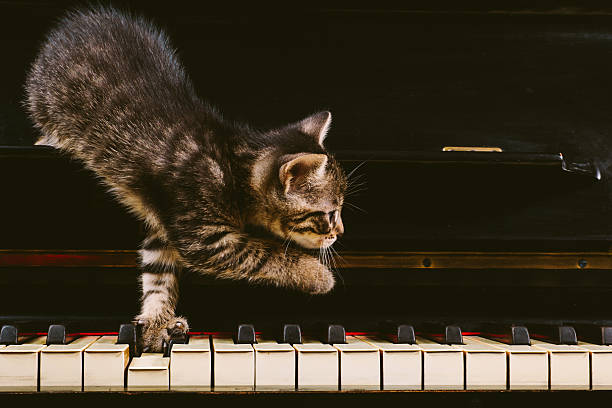
She was my second companion (after Dan — remember the boy with whom I ran off into the world?). Her name was Lacrima, though her parents called her by the diminutive Lăcrămioara — neither suited her anyway… Ironically, in the two years we spent hanging out together, I never once saw her cry. Here I’ll call her Little Tear, because it sounds less “lacrimoso” in English than it does in Romanian — and because that little tear was mine… I’ll explain later why.
I was fooling around with the usual group of kids in the yard in front of our ten-story apartment block when I noticed her. Although she’d come with her sister, she was playing alone. I was somehow shocked by how self-absorbed she was — it was her and the rest of the world. I was very social back then, and I couldn’t imagine why or how someone would prefer to play alone — not bothered at all by the other kids, by anyone or anything.
The second thing that struck me was her appearance: tangled brown curls defying both comb and gravity, blue-green eyes… I don’t remember her features, whether she was pretty — because that wasn’t the first thing one perceived at first sight, at least I didn’t — but rather the nervous vibration emanating from her, written all over her body: her clothes twisted on her as if she lived in a permanent whirlwind, one sock up, one down, bruises on her knees and hands… and at the back, part of her skirt was caught in her underpants. Had it been anyone else, I would have burst out laughing, but she commanded respect. Even so, I felt the impulse to fix those curls and her clothes, or at least to tell her — but I restrained myself, understanding from her movements and restlessness that it would have been useless: within minutes she would have returned to the original twisted condition of her being.
I don’t remember how I approached her, or what my first words were. What I know is that from that day on we were together all day long — sometimes with our siblings, her sister Mirela and my brother Paul, but they were just quietly filling the background of our vivid, sometimes wild games. Mirela was the opposite of Little Tear: she was all peace and sunshine, smiling all the time. I remember her chestnut-colored hair, the bright green eyes, and that smile…
Little Tear didn’t smile or laugh — at least not that I remember. She didn’t talk much either: monosyllabic answers, sentences never longer than four or five words. I did the talking and the laughing. That doesn’t mean she wasn’t expressive — that nervous vibration was almost tangible, and it made me restless too. Within a week or two of hanging out with her, I started coming home with dirty clothes and bruises on my legs and hands. I don’t remember what exactly we did, just that we were always in motion — running, jumping, climbing — and I recall the scene of us hunting Darius.
Why were we after Darius? He was a boy from the neighborhood who had said something nasty to Mirela. And besides, how did he dare to bear the name of a Persian king? That little nothing… Darius was six; I was eight going on nine, Little Tear six going on seven. We decided to take revenge. For days, whenever we met on the playground, he would run away and we would chase him. Luckily, he was faster — we never caught him…
When not on the playground, we were at Little Tear’s place. I loved the lovely chaos of their apartment: kittens — rescued by Little Tear from the street — stumbling around our legs; toys, clothes, shoes all over the place. Their mother worked from home, sewing gloves. I forgot to mention that Little Tear’s surname, translated into English, was Glove. So watching Mrs. Glove sewing gloves felt like the utter irony of the Spirits, of God, of whoever else is up there.
On my first visit I wouldn’t have noticed her if not for the sound of the sewing machine and the sacks of gloves piled around her. She received the material from the factory — why not shirts, skirts, trousers, anything but gloves? She melted into the background, a quiet and peaceful energy… I recognized Mirela’s features in her. Mirela and I used to spend hours helping her turn the glove fingers right-side out while I told her my stories — Little Tear joined us only for short intervals, when she got tired, I suppose; sitting still for long was not in her repertoire. Mrs. Glove listened, sometimes smiling, sometimes asking a question… but most of the time she was quiet. There was a lot of sadness in her, and I felt an urgent need to cheer her up with my stories. When I met Mr. Glove, I understood why.
He appeared like Gulliver in our Lilliputian world. Not bothered by the chaos, he slalomed between kids, kittens, toys, shoes, and all sorts of unidentified objects — most probably parts of disassembled toys — with a large, kind smile. He was a tall, beautiful man, an officer in Communications and Informatics — he knew my father, who served in a tank battalion at that time. By training he was an electrical engineer. Rumor had it he was the descendant of an aristocratic family that had lost everything when the communist regime took over. Mrs. Glove had been a maid working for his family — and here follows the classic story… She got pregnant; he married her.
I felt that Mrs. Glove was for him just a character in the Lilliputian world surrounding him. A beloved one, but no more than that. When the glove fingers went flying toward the sacks at high velocity, that was the signal — the only one, actually — that Mrs. Glove was upset. I asked Little Tear what had happened. She whispered that someone had seen Mr. Glove with a molly at the Opera… It was the first time I ever heard her whisper — and the first long sentence she ever spoke to me.
Little Tear showed no emotion when she told me about her father’s flings. Or maybe the whispering was her way of expressing emotion. Mr. Glove was a talented, multilingual engineer, likely specialized in electronics. He was passionate about TVs, and he was the number-one technician in the district to call when a TV broke down. As such, he was a VIP, because a TV in those days was the most valuable asset in a Romanian household. If it broke, it was a tragedy. You couldn’t simply buy a new one — you were put on a waiting list, and it could take months, even years.
His popularity had a hidden aspect — well, more or less hidden. He fixed not only the TVs but their owners too, when those happened to be women — TVs to owners at a ratio of about 80 to 20…
However, in spite of everything, he was a kind man — it was impossible to stay upset with him. His daughters adored him, and so did Mrs. Glove; apart from the occasional flying glove fingers, she seemed content, even with that sadness of hers…
Mr. Glove loved teaching children. He spent hours explaining to me the electronic components of a disassembled TV — he had tried first with Little Tear and Mirela, but since they didn’t show much interest, he chose me as his pupil in electronics. I was very curious, but I couldn’t connect the abstractions of current and voltage with those little components. However, I was fascinated by the Cathode Ray Tube, and since I didn’t understand how it worked, I built my own story around it, telling myself it was full of Spirits, fairies, and dwarfs…
Then came the day something swept the fairies and dwarfs aside. Little Tear approached me on the playground, visibly excited, and delivered the second-longest sentence I’d ever heard from her: she was getting a pianino from her father, and I should come listen to her play.
Walking into the apartment, I saw the entire family in the dining room, waiting for Little Tear to start. She sat on a stool in front of the shiny new pianino with her usual appearance: one sock up, one sock down, bruises on her knees, twisted clothes, the hair of a little Beethoven… Only at the first chords did I notice her hands, with their long fingers. They weren’t the hands of a child… those were mature, intelligent hands, hands that spoke of concentration and talent.
It was the first time I had seen a piano in real life, up close. I was in awe, and Little Tear’s playing left me ecstatic — not only because it was technically perfect (I’m no expert, obviously, but I could sense false notes and clumsy technique, since I listened to a lot of classical music), but because of the emotion and the revelation it carried. Those were the emotions of someone who had lived lives — not just one life, let alone the six years of a child. Of course, at the time I didn’t understand — I just had the unexplainable feeling that Little Tear knew much more than I did, much more than her parents. She was unrecognizable… she was transfigured, the nervous vibration gone, her hands caressing the keys. I had never seen such gentleness in her — it was as if she and the pianino formed a single being.
From that day on — for weeks, months — I went to her place every day to listen to her play. She taught me a few simple songs; I remember us playing a passage from Für Elise together… me struggling with the left hand, which wouldn’t obey me, and Little Tear scolding me: “Gently, don’t hit the keys!” Later she’d just say, “Don’t…!” During those months I kept trying to explain to myself what that knowledge was that made her so different. It wasn’t the talent, nor the piano playing… it was something else… Until one day, when her family was in the room listening to her play, I looked around — at her parents, her sister, then back at Little Tear — and I realized she was old. Older than everyone in the room. That was the revelation of the old souls — my first revelation — and I carried it with me like a gem in my pocket, taking it out and looking at it whenever I had fear of the death.
It was a mystery when she had learned to play the piano, since, apart from school, we spent most of our time together. She told me her father had enrolled her at the People’s School of Art and that she was taking classes. I wanted to go too, but I was too old — the age limit was seven, and I was eight going on nine. I told my parents I wanted a piano too, but my father asked me to think about the first thing I did whenever I had free time — and even when I didn’t: I read all day long, everything that fell into my hands — books, newspapers, the labels on bottles during meals… He also reminded me what had happened with my ballet classes, gymnastics, swimming… and what would happen if I got the piano… He was right…
Our friendship faded the way childhood friendships do — without a quarrel, without a goodbye. I don’t remember exactly when or why our paths split — most probably when we moved to the other end of the district and changed schools. I was fourteen; it was summer, and I was preparing for the entrance exam to the high-school. I took a break to go out and do the shopping for my mother, when I heard the rumble of a tractor passing on the road. I turned my head and thought I was hallucinating. Little Tear was driving the tractor. It was her… How on earth had she landed from the piano stool in the driver’s seat of a tractor? In Romania at that time you couldn’t just drive a tractor as a hobby, nor because you had a farm — there were no private farms. The only option left, considering her age, was that she was a student, learning to drive agricultural machines. Saddened, I tried to figure out what had happened; then I remembered Mr. Glove’s passion for teaching, and his conviction that children must be taught as many skills and trades as possible — it seemed he had successfully applied it to Little Tear. She looked happy, proud to be driving that tractor. I don’t know what happened to her in the years that followed; I lost track of her. I never found out what happened to the piano either — whether it still stood in that crowded apartment among the kittens and the sacks of gloves, whether she still played.
As I write this, I hear her scolding me — “Don’t…!” — and I burst into big tears…